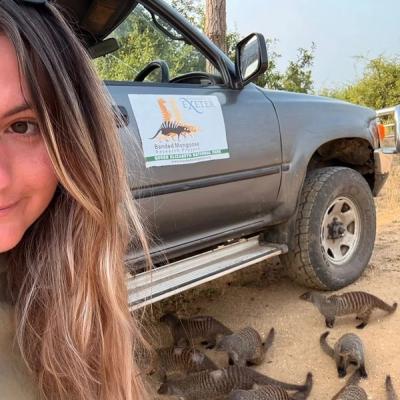
My PhD at Oxford Brookes University focuses on wild sleep ecology. I’m investigating how the social relationships of banded mongooses influence their group sleep, including who sleeps with whom, individual sleep cycles, den selection, and the impact of humans and changing climates on their sleeping behaviours. To do this, we’re using a variety of miniaturized, animal-mounted technologies to help us see where we quite literally cannot, including proximity loggers, accelerometers, and local environmental monitoring devices. Previously, I’ve worked across Africa with a range of species, from the southern white rhino to the spotted hyena, and I’m primarily interested in non-invasive methods to support human-wildlife coexistence. I also love wildlife photography and documenting conservation stories with my camera. In my free time, you’ll mostly find me walking my dogs, editing photos, or reading fantasy novels.
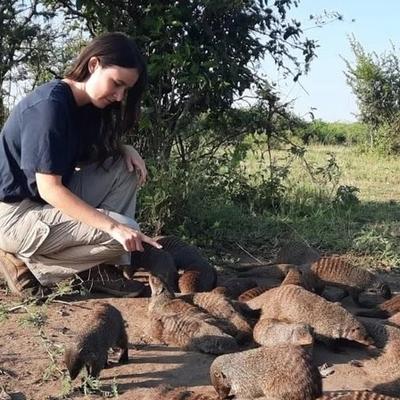
My research is on the cleaning symbiosis between banded mongooses and common warthogs, a rare mammal-mammal mutualism which is restricted to certain mongoose groups. We have little detailed understanding of the behaviours that are used to coordinate and sustain interspecific cooperation among animals; my focus is on how individual differences affect cleaning engagement, the role of social learning, interspecific communication between the two parties, and geographic variation in the behaviour. I love working at our field site and conducting personality trials, and find these questions super interesting as they can help us understand why animals behave the way they do, and how a changing environment may affect them. Besides research, I work as a photographer and in communications, and in my free time I love reading a long book or sea-swimming.
I am interested in the evolution of cooperation and conflict in animal groups. I joined the Banded Mongoose Research Project as a PhD student in September 2025 to work on the evolution and life-history consequences of warfare, both in the mongooses and more generally. I will be trying to tackle these questions using a combination of theoretical models, the project’s long-term database, and empirical fieldwork. Previously I studied the anti-predator behaviour of wild Caribbean reef squid (Sepioteuthis sepioidea). These animals coordinate their defensive behaviour across a shoal of 3 – 20 individuals in an attempt to avoid being eaten – a consistent struggle given they can encounter predators up to seven times per hour! Outside my research, I sing professionally as a countertenor and in my free time I can normally be found either on, in or under the sea.
Laura LaBarge
Postdoctoral Research Associate
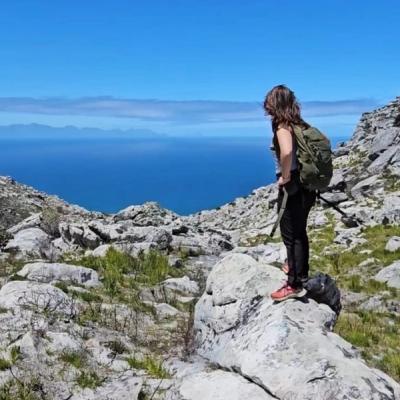
I’m creating an ATLAS system to monitor banded mongoose movement, which will be used to understand attraction-avoidance dynamics between mongoose groups. I’m originally from Upstate New York, where I worked on birds, amphibians, and carnivores. I then moved to the remote Soutpansberg mountainous to work on wild primates and leopards in rare Afromontane mist-belt forests. I love the physical challenge of scaling cliffs and crawling through wet forests, and was lucky enough to receive a Presidential Fellowship from The State University of New York to continue my work on primate-predator interactions for my PhD. After returning to the US, I worked on the ecosystem impacts of mountain lions. In 2021, I moved to Germany to work as a postdoc at The Max Planck Institute of Animal Behavior, before moving to the UK in 2024. In my free time, I love lone hiking in the backcountry, lifting weights, and bad weather.
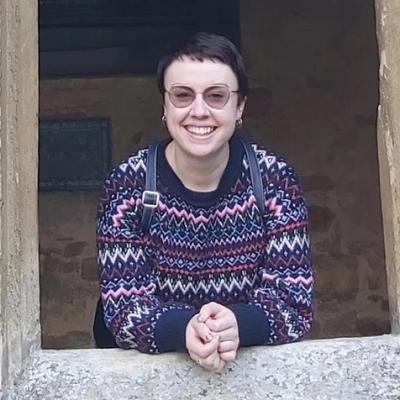
I’m a final year PhD student at Swansea University investigating inheritance routes, scent gland histology and glandular microbiomes in banded mongooses, under the supervision of Dr Hazel Nichols. My main research interests lie in understanding the evolution of social behaviour and exploring the genetic and cultural routes in which information can be inherited across generations. While I have always been curious about the relative contributions of nature and nurture in shaping who we are, it was researching bumblebees during my undergraduate research project at the University of Stirling that really ignited my interest in social behaviour. I was introduced to the banded mongooses during my master’s degree at the University of Exeter and have continued pursuing my research interests using this system during my PhD. Outside of my research, I’m at my happiest turning my love of wildlife into cross-stitch, embroidery or crochet and I attend local art classes where I’ve recently learnt how to paint in watercolour.
Erica Sininärhi
PhD student
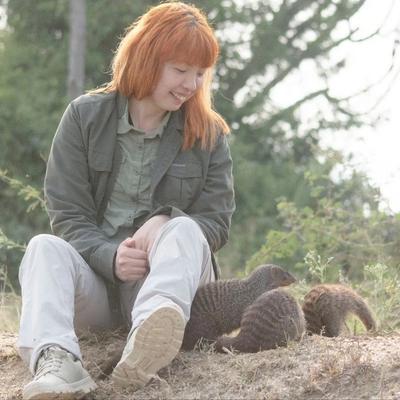
I am a PhD student at the University of Helsinki. Joining the Banded Mongoose Research Project and studying behaviour in mongooses has been my dream ever since I first read the article about imitation and traditions (Müller & Cant, 2010). My main interest is behavioural ecology, especially consistent individual behavioural differences (animal personality) and social behaviour. In my PhD, I study physiological correlates of variation in personality traits in the banded mongoose. Identifying connections between personality and physiological traits would help us to understand the underlying mechanisms of personality which may offer new tools for e.g., conservation. In my free time, I play football, knit and sew clothes, take pictures of nature, and learn African languages (e.g., Rutooro and Luganda)!
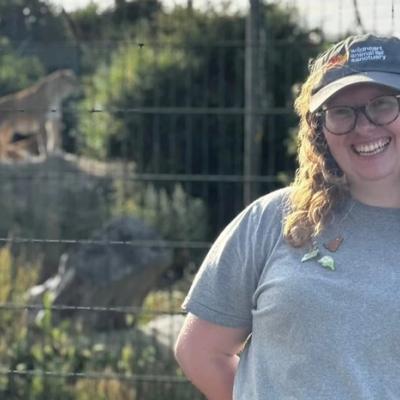
I'm Zoe, joining the Banded Mongoose Project as a PhD student at the University of Exeter, Penryn, in September 2025. My research within the INTERGROUP project will explore how conflict evolves in cooperative systems, specifically focusing on the interplay between group cohesion and individual roles in banded mongooses. Previously, I studied social ontogeny and foraging development in meerkats, which sparked my fascination with behavioural observation and social dynamics. Animal behaviour has become my passion because of the insights and questions that emerge from careful, patient observation of natural systems. Beyond research, I'm passionate about outreach and education, having worked in rewarding roles at animal sanctuaries and nature reserves. To decompress, I can often be found enjoying a good sunset, tap dancing, reading, or crocheting.


